
Ride Date: May 30, 2026
Route: 10 Hill Climbs in Eastern Gyeonggi Province, South Korea
Distance: 151 km
Elevation Gain: 2,400 m
Temperature: High of 32°C (90°F)
Riders: Solo
This ride took place in eastern Gyeonggi Province, South Korea, a popular cycling region located just east of Seoul. The area is well known among local cyclists for its combination of scenic mountain roads, rolling terrain, and numerous hill climbs that can be linked together into long endurance routes.
Even though it was still May, the weather felt more like midsummer.
With the Seorak Granfondo approaching on June 20, I wanted a training ride that would include plenty of climbing. At the same time, I wasn’t looking to travel too far, so I searched for a route that would allow me to tackle multiple climbs within a reasonable distance from Seoul.
Eastern Gyeonggi Province, located just outside Seoul, is one of South Korea’s most popular cycling regions, offering countless hill climbs and scenic mountain roads.
Rather than revisiting familiar routes, I wanted to explore something new. A friend recently rode a route featuring ten different climbs and shared the GPX file with me. After making a few adjustments to create a better loop course, I decided to give it a try.
The route started from Yangsu Station, climbed through several mountain passes in the eastern region, and eventually returned to the starting point.
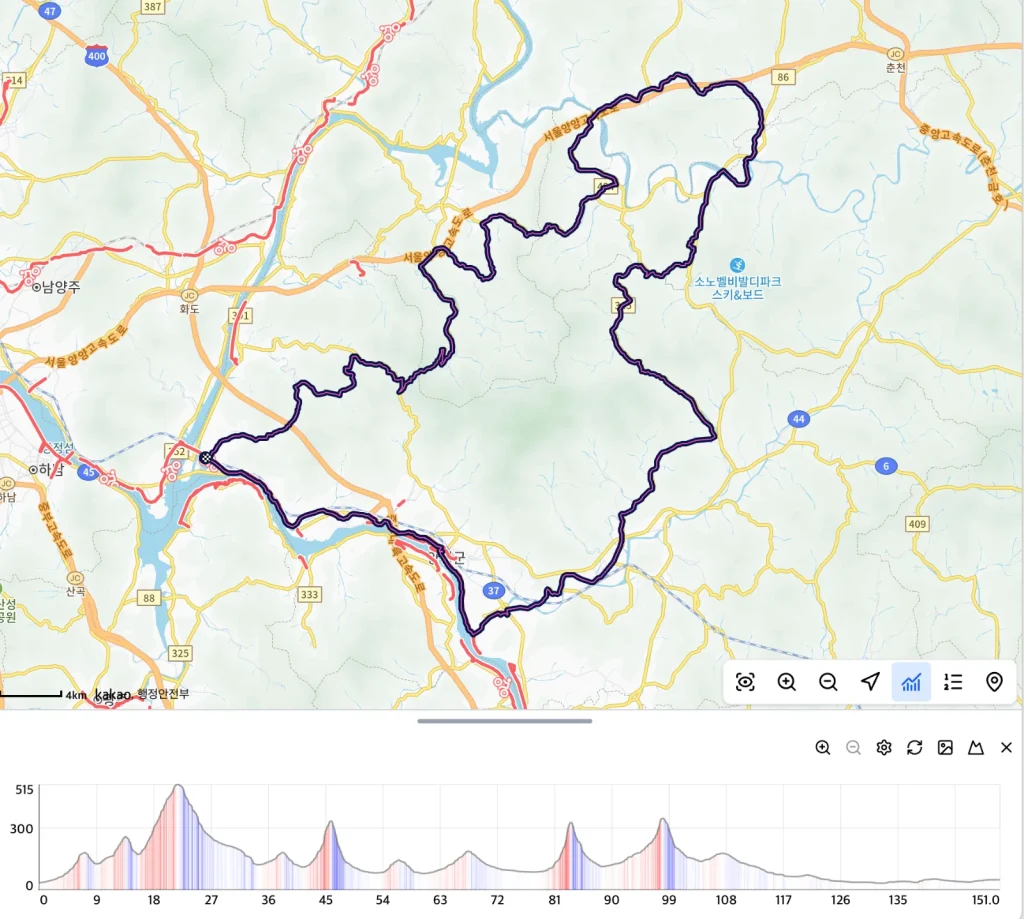
The major climbs were:
Beot Hill → Seohu Hill → Joongmisan & Yumyeongsan → Machi Hill → Neolmijae → Mogok Hill → Sapdari Hill → Daegokchi → Biho Hill → Malchi Hill
Among them, Sapdari Pass and Daegokchi were completely new to me.
Since the route was both long and climbing-heavy, I started early. After parking near Yangsu Station, I rolled out around 7 a.m.
Beot Pass and Seohu Pass felt familiar, as I have ridden them many times before. Jungmisan was also a regular climb for me, but instead of descending at the observatory junction as usual, I continued toward Yumyeongsan to reach the Neolmijae side of the route.
The section connecting Jungmisan and Yumyeongsan was longer than expected and required a steady effort throughout.
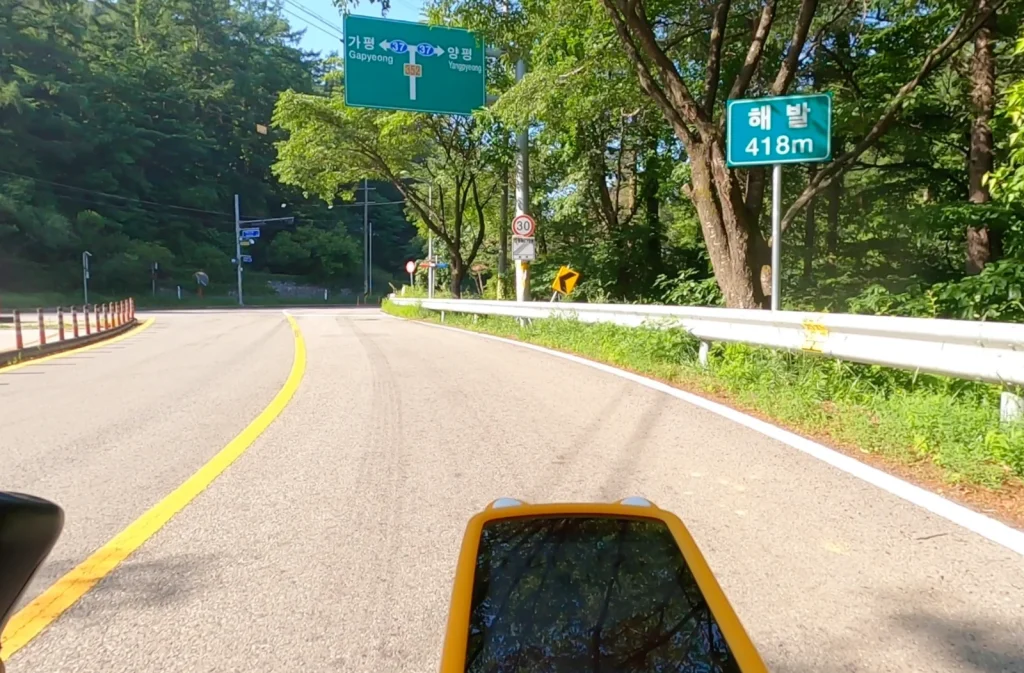
After descending Yumyeongsan, I continued toward Machi Pass and eventually climbed Neolmijae.
Neolmijae is well known among local cyclists for being deceptively difficult.
I remember thinking:
“Once I get over Neolmijae, the rest should be manageable.”
As it turned out, that assumption was completely wrong.

After crossing Mogok Pass and Sapdari Pass, I reached a climb called Daegokchi.
At first, it looked like an ordinary climb with a moderate gradient. Then, just before entering a tunnel, my Garmin suddenly directed me onto a narrow road to the left. It appeared to be the old mountain road.
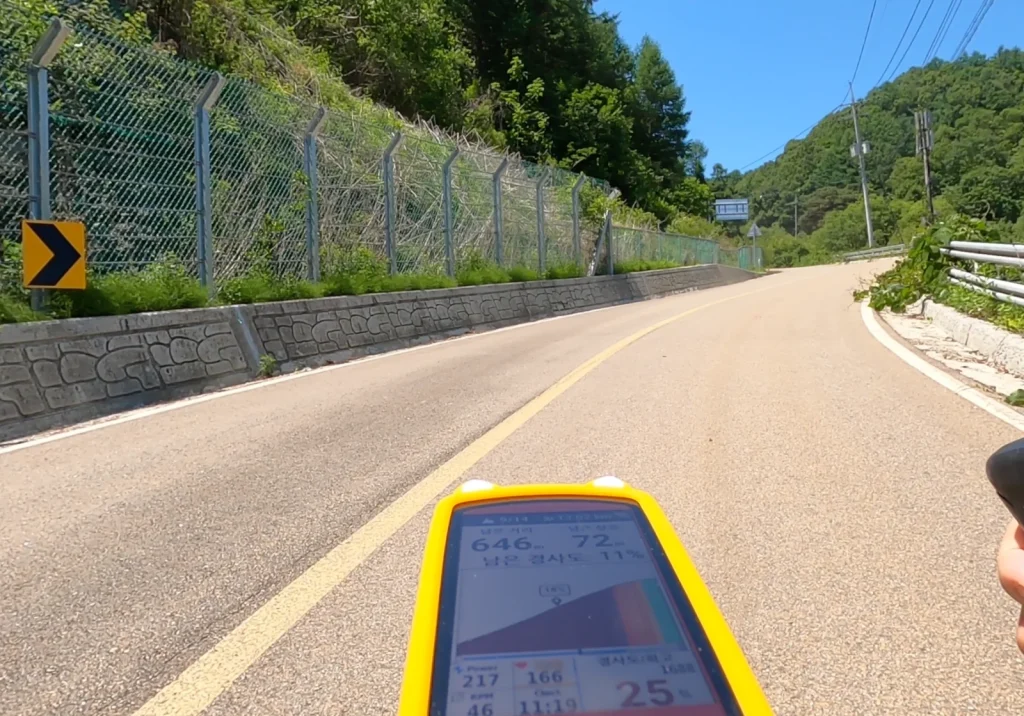
Daegokchi became the most memorable climb of the entire ride.
The gradient repeatedly jumped between 15% and 25%, making it far tougher than I expected. I had assumed Neolmijae would be the highlight of the day, but Daegokchi easily stole that title.
Let’s just say there were several moments when I questioned my life choices.
Honestly, it’s not a climb I’m eager to revisit.
After finally getting over Daegokchi, I descended into the beautiful Sori Mountain valley road.
The roads around Sori Mountain are among my favorites because of the scenery. On this day, however, I encountered something unusual. Countless moth-like insects covered sections of the road, while even more swarmed through the air around me.
It was a sight I had never seen before.
As the clock passed 11 a.m., the heat became increasingly intense.
My energy was draining quickly, and I was nearly out of water. I kept hoping to find a convenience store when, fortunately, the Sori Mountain spring appeared.
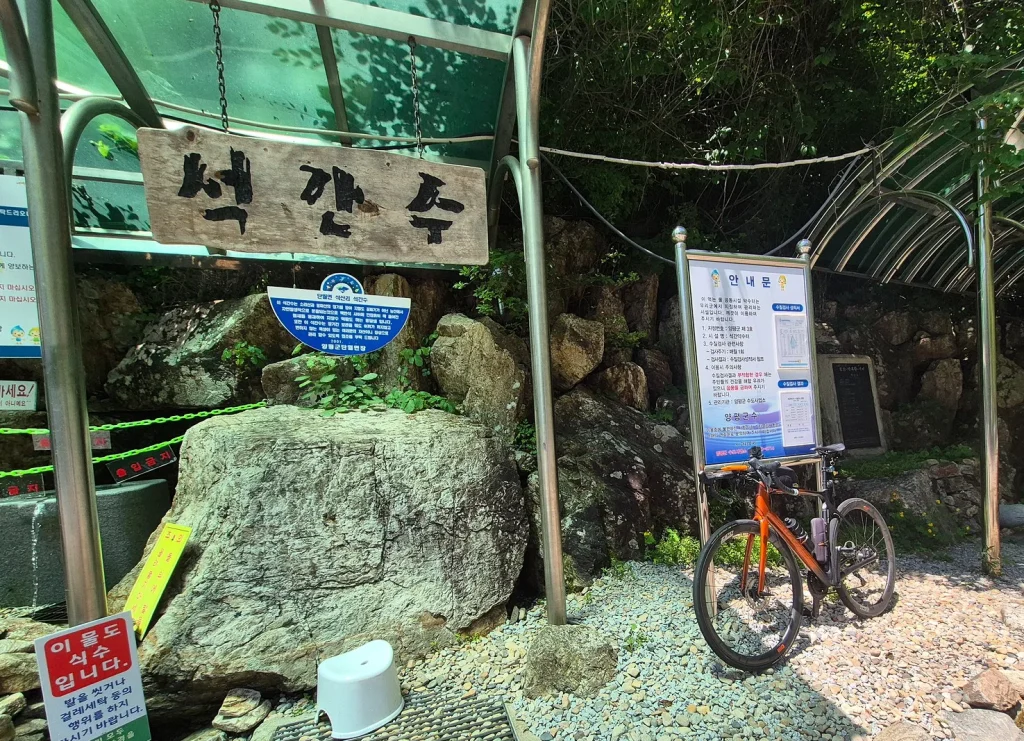
After drinking some cold water and refilling my bottles, I felt human again.
Once I finished the remaining climbs of Biho Pass and Malchi Pass, I stopped near Yongmun Station for lunch.
For some reason, I had been craving kongguksu (cold soybean noodle soup) all day, so I found a nearby restaurant and ordered a bowl.
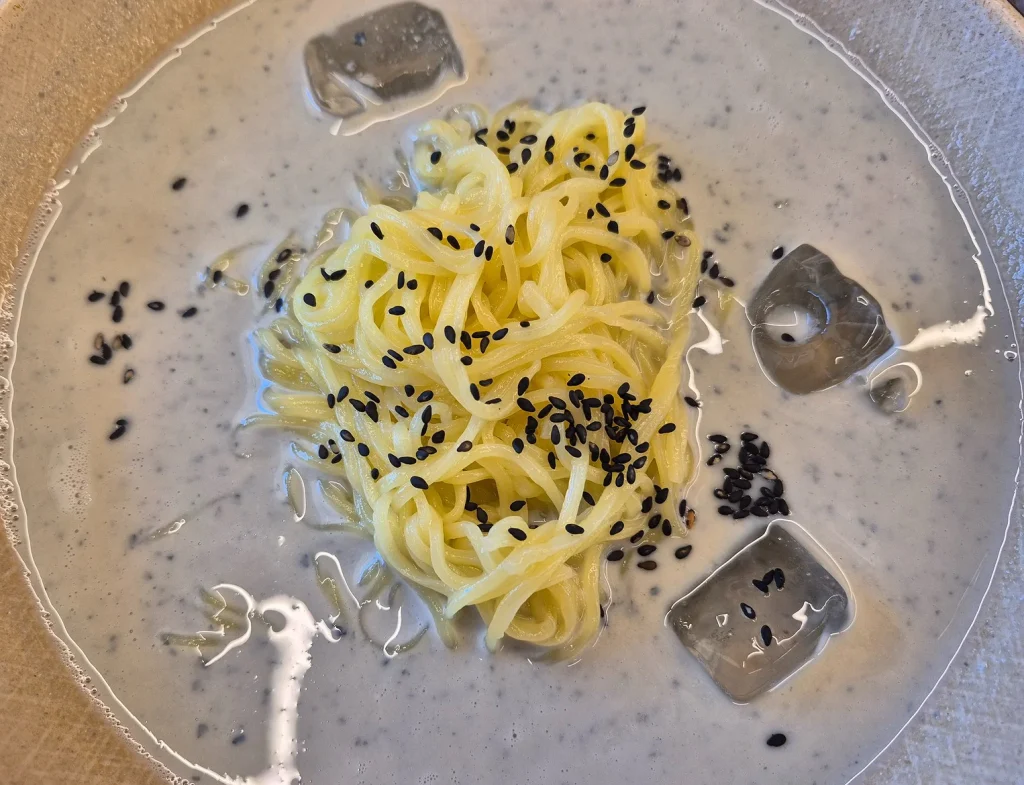
Normally, a meal helps restore my energy, but not this time.
The heat had already taken its toll.
Fortunately, most of the remaining route was flat. My legs weren’t feeling particularly strong, but the cool air inside the cycling-path tunnels helped lower my body temperature little by little.
Eventually, I made it back safely and completed the ride.
Thoughts After the Ride
It was unbelievably hot.
I could hardly believe this was still May. If conditions like this continue into June, heat management may become one of the most important factors at the Seorak Granfondo.
I remember struggling under strong sunlight during the Yangyang Granfondo a few years ago, and this year could present very similar conditions.
Next week will be my final long climbing ride before Seorak Granfondo. After that, the focus will shift toward recovery and race preparation.