
This ride took place in Gyeonggi Province, South Korea, on roads and mountain passes commonly used by local cyclists preparing for long-distance gran fondo events.
- By Simon / June 10, 2026
- Ride Date: June 6, 2026
- Route: Northern Gyeonggi Mountain Route
- Distance: 150 km
- Elevation Gain: Approx. 2,500 m
- Temperature: 13°C – 27°C
- Riders: 2
Only two weeks remain until the Seorak Granfondo.
I spent quite a bit of time deciding where to ride this weekend. Before Seorak, I felt I should tackle at least one long climb comparable to Hwaaksan. Around the Seoul metropolitan area, Hwaaksan is considered one of the more demanding climbs in both length and gradient, and getting comfortable with that kind of effort can make race day much more manageable.
The challenge was finding enough distance.
Most Hwaaksan routes start from Gapyeong and include either Hwaaksan and Domachi Pass alone, or several additional climbs. The shorter version usually ends up around 60–70 km, while the longer versions are typically around 100 km.
Since this would effectively be my final mid-distance ride before Seorak, I wanted something closer to 150 km. Starting next week, the focus would shift from building fitness to maintaining form and recovering well.
After drawing various lines on the map, I created a large loop starting and ending at Cheongpyeong Station.
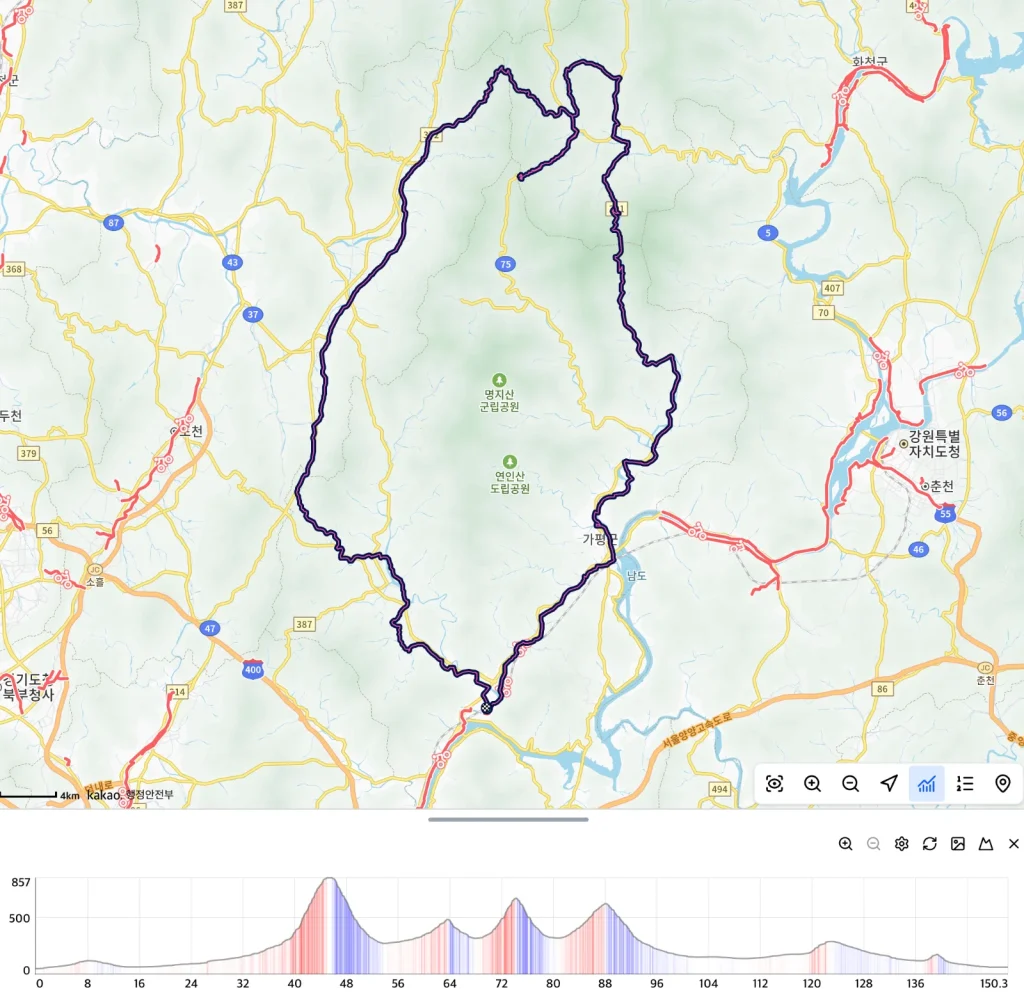
In simple terms, today’s route looked like this:
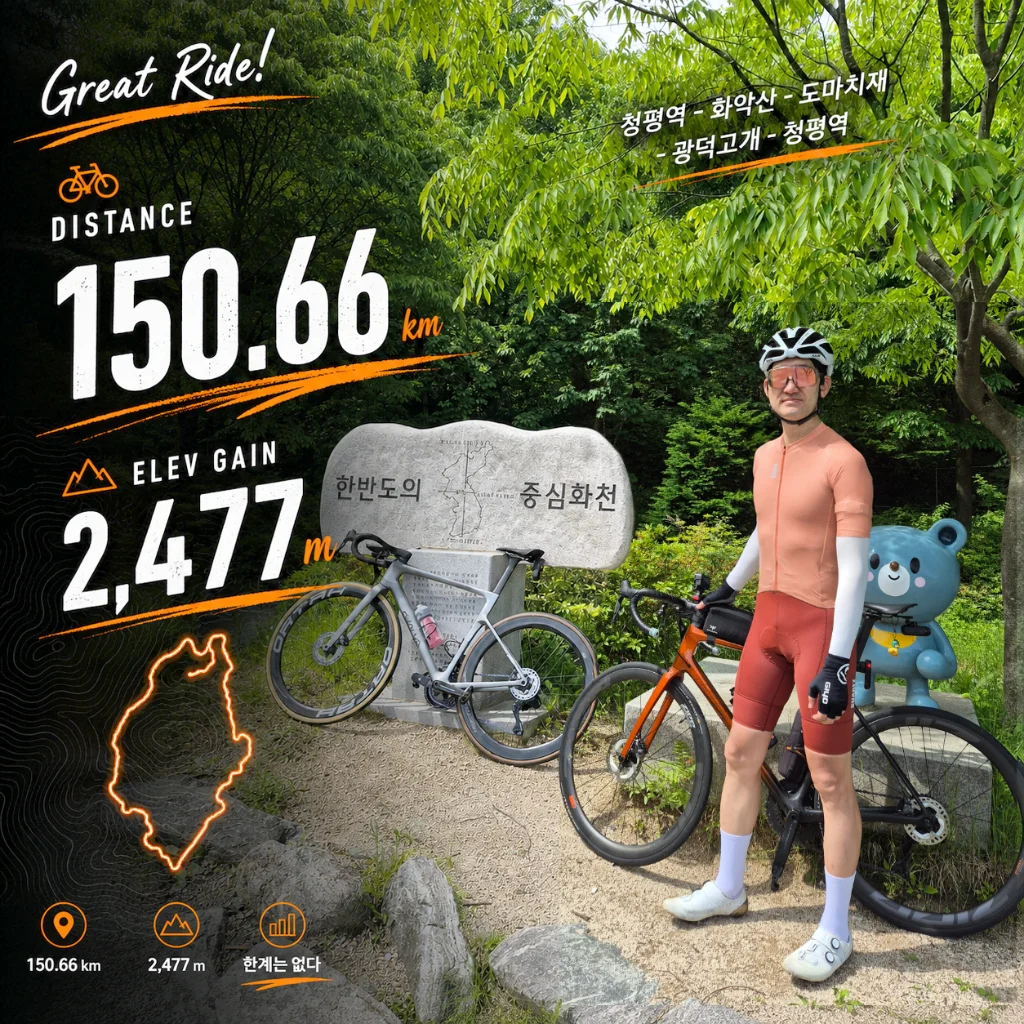
Cheongpyeong Station → Hwaaksan → Domachi Pass → Gwangdeok Pass → Cheongpyeong Station
Total distance was approximately 150 km with about 2,500 m of climbing.
I rode with a friend today and set three personal rules with the Seorak Granfondo in mind:
- Minimize time spent at convenience-store stops
- Keep flat-road power below 170W
- Avoid pushing above 190W on climbs
Hwaaksan, however, was an exception.
Once the climb began, maintaining cadence required using every available gear, and my power frequently drifted above 200W. Much of Hwaaksan consists of steep gradients, making it difficult to stay at 190W.
We arrived at Cheongpyeong Station early and rolled out around 7:20 a.m.
The weather could not have been more different from the previous weekend. It was so cool in the morning that it almost felt cold.
The route from Cheongpyeong to Gapyeong follows a familiar bike path.
At the same time last week, the heat was already building. Today the air felt completely different—perfect riding weather.
After passing Jaraseom Island in Gapyeong, we left the Bukhangang bike path and headed toward Hwaaksan. Personally, I prefer the quieter back roads over the main highway toward Buk-myeon, which tends to carry heavier traffic.
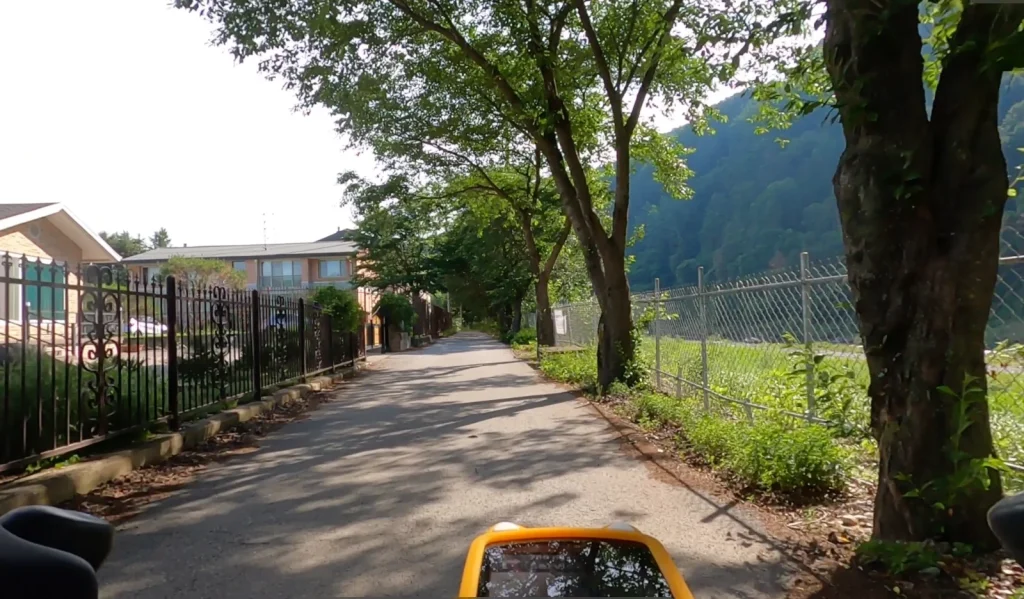
And finally, the first major highlight of the day: Hwaaksan.
Among Korean cyclists, it is widely regarded as one of the toughest climbs in Gyeonggi Province. The climb stretches roughly 6.8 km with an average gradient of around 9%. After the opening section, much of the climb remains in double-digit gradients.
My friend had never ridden Hwaaksan before.
“Welcome. First time on Hwaak, right?”

After passing through Hwaak Tunnel, I stopped near the summit at Gomdori Rest Area and waited for my friend.
Unfortunately, the nearby spring water had recently been declared unsafe for drinking. I discovered that fact only after already taking a sip. Next time, I should probably read the warning signs more carefully.
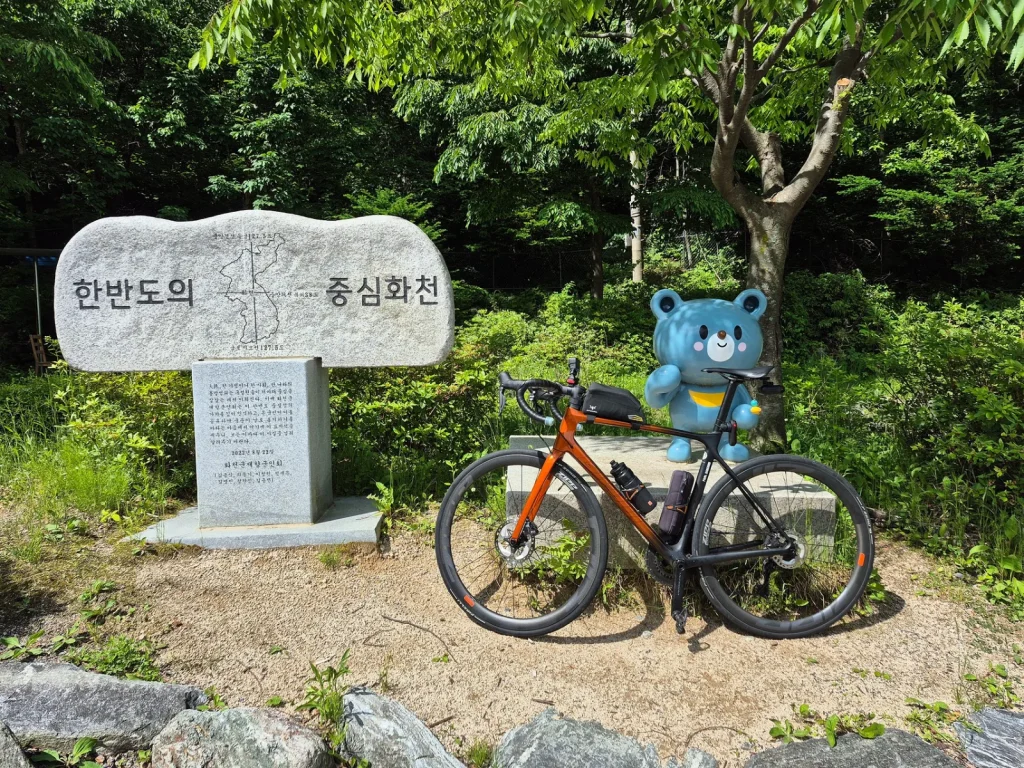
The descent from Hwaaksan always demands caution.
The road is steep, filled with hairpin corners, and the pavement is not particularly smooth. Vehicles can appear suddenly from blind corners, so excessive speed is never a good idea.
What surprised me most was how cold the descent felt. Just one week earlier I had been riding in near-summer heat, yet today I was feeling genuinely chilly.
Normally, riders heading to Domachi Pass turn left near Sanae High School. Today, however, I added another climb and detoured toward Bakdal-ro.
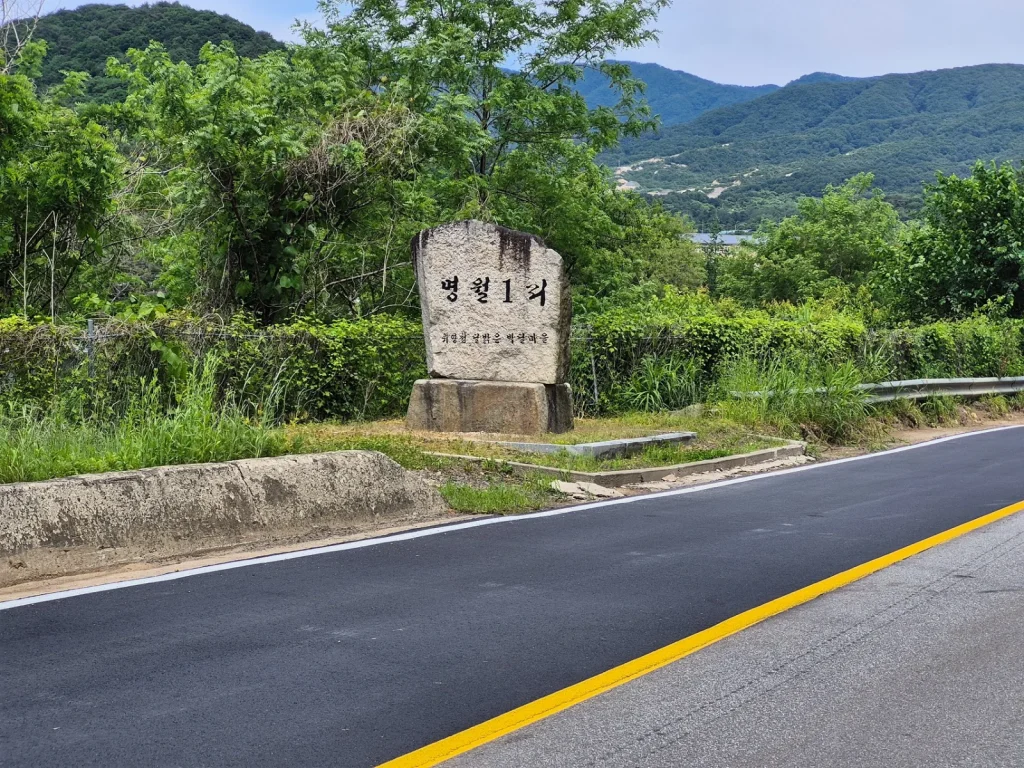
This was my first time climbing Bakdal-ro Pass.
Apart from a steeper section near the end, the gradients were relatively gentle. Still, it turned out to be longer than expected and left a stronger impression than I anticipated.
Then came the second major climb of the day: Domachi Pass.
Domachi is not quite as steep as Hwaaksan, but most riders reach it after already spending considerable energy on Hwaaksan, making it far from easy.
The climb is approximately 5.7 km long with an average gradient around 7%. The opening section feels manageable, but the final 3 km averages close to 9%, making it feel considerably harder.

We reached the summit of Domachi Pass.
Normally I would continue descending toward Gapyeong, but today’s route required a large western loop. Instead, we simply touched the summit and descended the same road we had climbed.
Come to think of it, this was my first time climbing Domachi and returning the same way.
After descending again and heading west, we soon arrived at the final major climb of the day: Gwangdeok Pass.
This was also my first time riding it.
The climb was longer than expected but much gentler. Aside from a few sections near the top, it was easy to maintain a comfortable pace throughout. Looking at the ride data afterward, the climb measured about 6 km with an average gradient of roughly 4.4%.
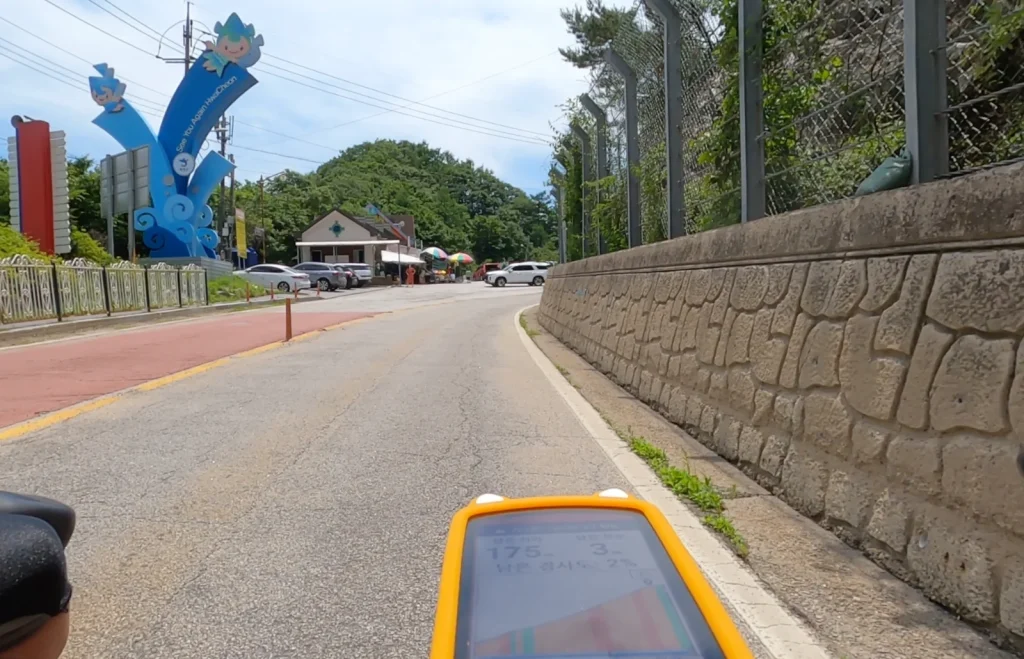
At the summit, my friend immediately stretched out on a bench.
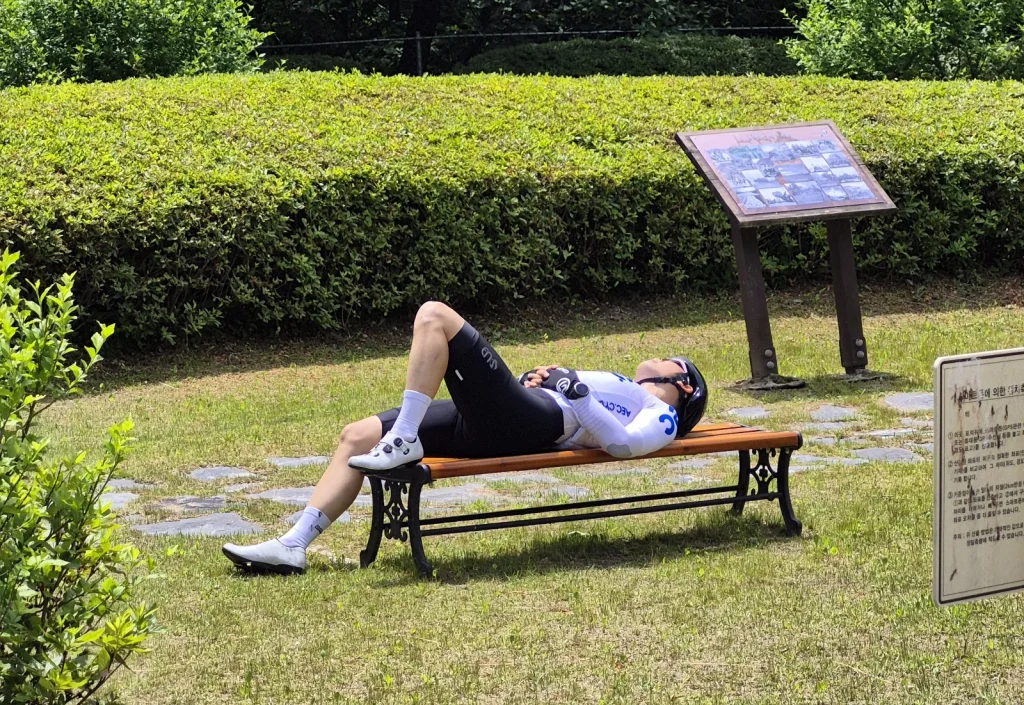
Apparently, Hwaaksan, Domachi, and Gwangdeok in a single ride had been a tougher combination than expected.
Still, by that point all of the day’s major climbs were behind us.
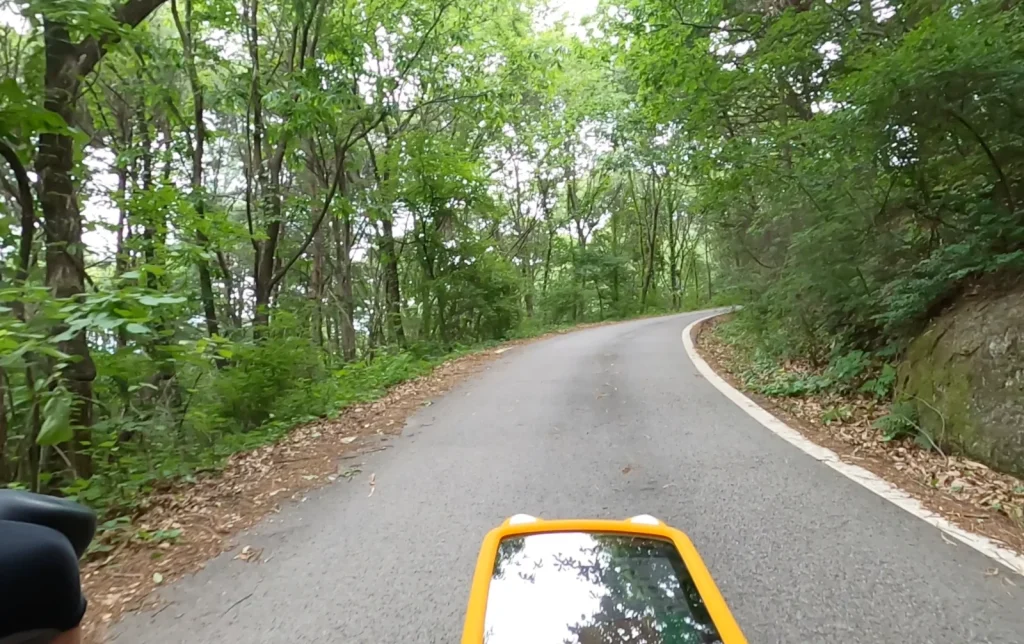
The western descent from Gwangdeok Pass felt wonderfully long. The continuous downhill provided plenty of recovery before we settled into the flatter roads leading back toward Cheongpyeong.
That said, the route was not entirely flat.
There was one short climb near Unaksan and another on a rural road close to Cheongpyeong. Neither was especially long, but both were steep enough to get my attention. They felt roughly comparable to Namsan in Seoul.
And finally, back at Cheongpyeong Station.
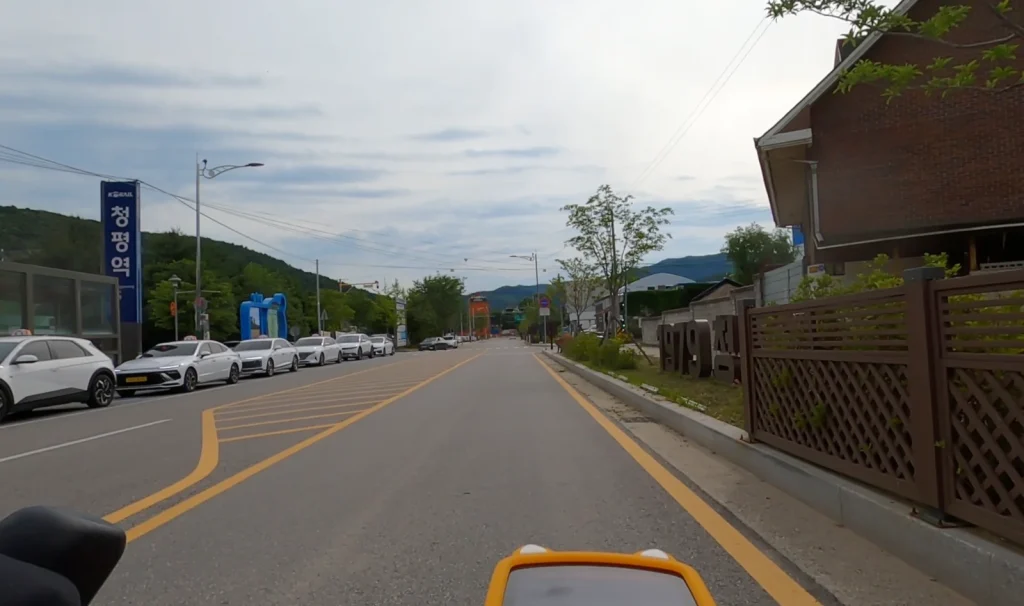
The weather remained excellent throughout the entire day.
Only a week earlier I had been riding in conditions close to a heat wave. This time, it was cool enough to feel cold on the descents. The contrast was remarkable.
If only race day at the Seorak Granfondo could offer weather like this.
Realistically, though, I still need to prepare thoroughly for hot conditions. Heat has never been one of my strengths.
As for training, this ride marks the end of the fitness-building phase.
Over the next two weeks, the goal will no longer be getting stronger. Instead, it will be arriving at the start line rested, healthy, and in the best condition possible.
The image below was generated with GPT using data from today’s ride.
GPT has become a surprisingly fun tool for creating ride-related content lately.
by Simon